'No Kings' Returns to Colorado as Nonpartisan Voter Rally
Saturday's 'No Kings' event returns to Colorado reframed as a nonpartisan voter turnout rally, drawing Denver-area community organizers.
A Familiar Name, A Different Pitch
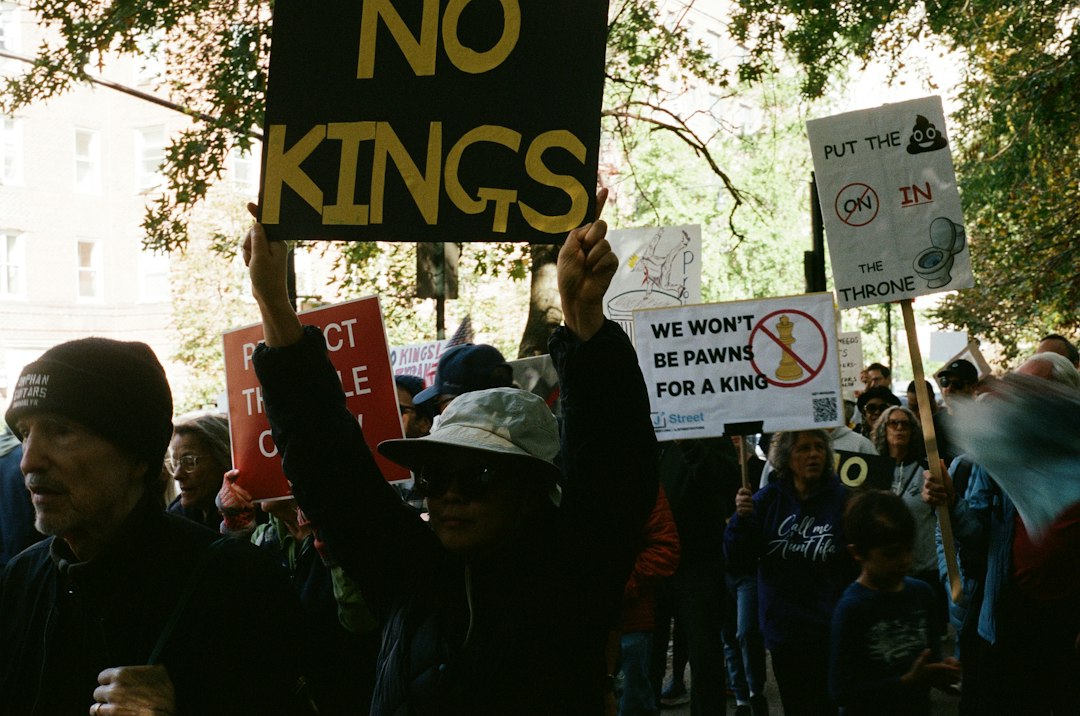
The “No Kings” demonstrations, which have drawn crowds across Colorado and the country over the past couple of years as a vehicle for protesting the Trump administration, are returning to the state this Saturday — but organizers say this iteration looks different. According to The Denver Post, this weekend’s event is being framed not as a partisan protest but as a nonpartisan voter turnout rally, a shift that comes as Denver heads into a consequential city council election.
The rebranding marks a notable change in tone for a movement that has, since its inception, been closely associated with opposition to the Trump administration and conservative policies nationally. Organizers behind Saturday’s event are now emphasizing civic participation and voter mobilization rather than explicit political messaging, according to the Post’s reporting.
Why the Pivot Toward Turnout
The timing isn’t incidental. Denver voters are in the middle of deciding a pivotal at-large city council seat, with Axios publishing a “1-minute voter guide” this week to help residents navigate the race, and Denverite detailing how campaign finances and endorsements are shaping the contest. The Denver Post has also reported on an unusual wrinkle in the city’s council vacancy race: two leading candidates whose names are similar enough that organizers and campaign staff are actively working to help voters avoid confusing them at the ballot box.
Against that backdrop, community organizers appear to be betting that a mobilization message — focused on simply getting people to vote, rather than telling them who to vote for — can reach a broader cross-section of Denver residents than a traditional protest might. For local civic groups, the council races represent exactly the kind of down-ballot contest where turnout can swing outcomes, particularly in an off-cycle municipal election where participation tends to run lower than in presidential or midterm years.
Framing the Saturday gathering as nonpartisan also opens the door to participation from residents who might otherwise be wary of attending an event with an overtly anti-administration message, potentially widening its appeal among independent and moderate voters who care about local issues — city services, public safety, and council representation — but don’t necessarily want to wade into national political fights to do so.
Skepticism From Multiple Directions
Not everyone is convinced the rebrand changes much in practice. Given the “No Kings” name’s strong association with protests against President Trump and his administration’s policies, some observers are likely to view Saturday’s event as politically charged regardless of how it’s billed — a skepticism that cuts across the political spectrum. Conservative-leaning residents and commentators may see the “nonpartisan” label as a rhetorical softening rather than a substantive shift, arguing that an event built on a protest brand carries that history with it no matter how organizers frame the day’s programming.
At the same time, some progressive activists who have supported the “No Kings” protests as explicit statements against the administration could be wary of a version of the event that intentionally downplays that message in favor of general voter turnout themes. For organizers who built the “No Kings” brand around a specific political critique, diluting that message for the sake of broader appeal carries its own risks of alienating the base that showed up to earlier rallies.
That tension — between organizers’ stated goal of nonpartisan civic engagement and the public’s perception of the event’s political lineage — is likely to be a defining storyline as Saturday’s rally unfolds in Colorado.
The Local Stakes: Denver’s Council Election
The rally’s reframing around voter turnout dovetails with a busy stretch of local election coverage. Denverite’s reporting this week on campaign finance and endorsements underscores how competitive and closely watched the city council races have become, while Axios’s voter guide reflects efforts across local media to help residents quickly get up to speed on the at-large seat.
The Denver Post’s coverage of the council vacancy race — including the unusual challenge facing two leading candidates with similar names — highlights just how granular the stakes have gotten in this cycle. In low-turnout municipal elections, small factors like name recognition and voter confusion can meaningfully affect outcomes, which is part of why civic organizers have renewed interest in broad, nonpartisan get-out-the-vote efforts like Saturday’s rally.
For Denver’s community organizing infrastructure, the council races offer a test case: can a rally with roots in national protest culture successfully pivot toward hyperlocal civic engagement, and will residents across the political spectrum buy into that framing enough to show up?
A City Dealing With Other Pressures
Saturday’s rally also lands amid a week of other significant local news that has kept Denver residents’ attention divided. Denver police and the DEA announced the completion of “Operation Overdose Intercept,” resulting in 107 arrests and the seizure of 223 pounds of illegal drugs, including 133 pounds of fentanyl, according to CBS News and the Denver Gazette. Separately, 9News reported that a Denver councilwoman has been pressing police for answers on crime lab staffing, with concerns that the department may be withholding information.
Those stories underscore the range of civic issues competing for residents’ attention as they head toward the ballot box — public safety, drug policy, and police accountability among them — alongside the broader national political currents that have fueled movements like “No Kings.”
What to Watch Saturday
As the event unfolds, several questions will likely shape how it’s remembered locally: whether attendance reflects a broader, more politically diverse crowd than past “No Kings” protests; whether organizers’ voter-turnout messaging translates into concrete civic engagement around the council election; and whether critics’ skepticism about the event’s “nonpartisan” framing proves founded or overstated.
For now, Denver-area community organizers are betting that reframing a familiar protest brand around the basic act of voting can bridge some of the city’s political divides — even if, as both supporters and skeptics acknowledge, the “No Kings” name itself continues to carry plenty of political weight on its own.