
How Denver's 16th Street Mall Became the City's Main Street
A look at the history of Denver's 16th Street Mall, its 1982 design by I.M. Pei, and the challenges shaping its current renovation.
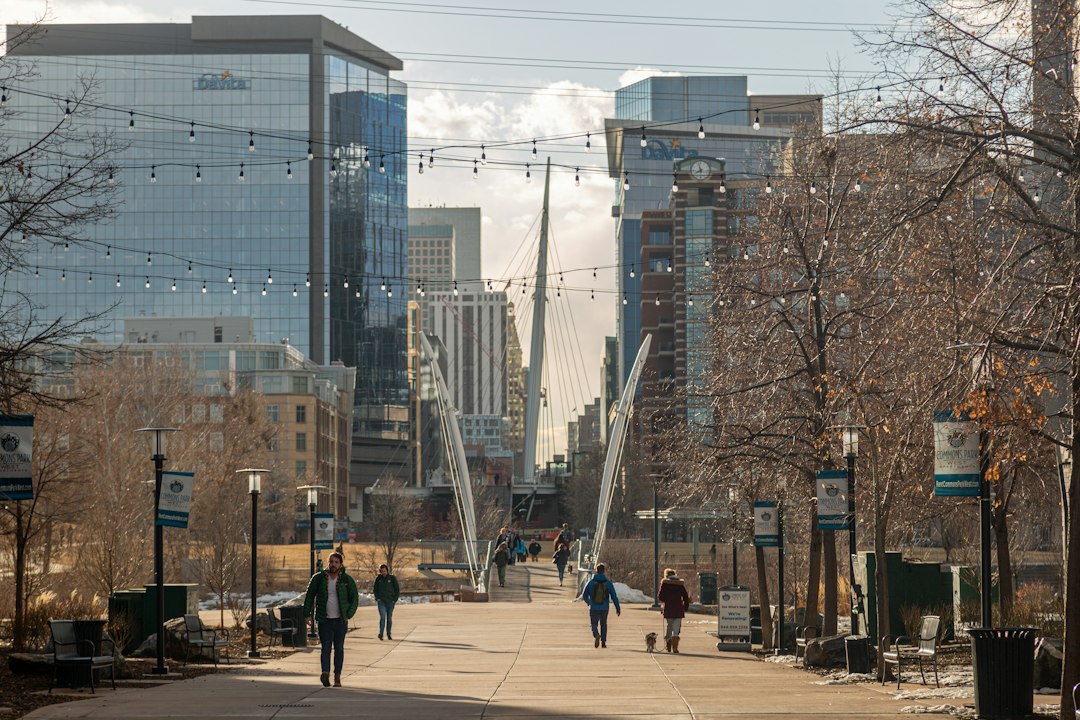
A Mile of Granite That Redefined Downtown
For more than four decades, the 16th Street Mall has served as Denver’s civic spine — a pedestrian-first corridor stretching roughly a mile from Civic Center to Union Station. It’s where office workers grab lunch, tourists snap photos of the mountains framed between buildings, and transit riders hop a free shuttle without ever digging for bus fare. But the Mall wasn’t always this way. Its transformation from an ordinary downtown street into Denver’s signature pedestrian corridor was a deliberate, decades-old urban planning experiment — one that’s now entering a new chapter with an ongoing, multi-year renovation.
Designed by World-Renowned Architects
The 16th Street Mall opened in 1982, the product of a design collaboration led by famed architect I.M. Pei, whose firm is known for landmark projects including the Louvre Pyramid in Paris and the East Building of the National Gallery of Art in Washington, D.C. Pei’s team reimagined 16th Street — then a conventional downtown thoroughfare clogged with car traffic — as a dedicated transit and pedestrian mall, closed to most private vehicles.
One of the Mall’s most recognizable design features is its paving pattern: a series of reddish and gray granite blocks laid in a design often described as resembling the skin of a diamondback rattlesnake, a nod to the regional landscape. That paving has become as much a part of the Mall’s identity as the storefronts and trees lining it, and its wear and tear over 40-plus years is a central reason the corridor is now undergoing reconstruction.
Public art has also long been part of the Mall’s civic character. The broader Civic Center and downtown corridor near the Mall is home to significant public sculpture, including work by British sculptor Henry Moore, whose large-scale bronze pieces are part of Denver’s civic art collection near the Denver Art Museum and Civic Center complex — reinforcing the area’s identity as a cultural as well as commercial district.
A Transit Corridor by Design
From the start, the Mall was built around the idea that people, not cars, should move through the heart of downtown. Private vehicles have long been barred from most of the corridor, with the exception of cross traffic at intersections, emergency vehicles, and limited service access. In their place, the Regional Transportation District (RTD) operates the MallRide, a free shuttle service that runs the length of the Mall, connecting the Civic Center Station on one end with Union Station on the other.
For generations of Denver commuters, the MallRide has functioned as the final — or first — link in a longer transit trip, ferrying riders between light rail and bus connections at either end of downtown without a fare. The free shuttle, combined with wide sidewalks, street trees, and ground-floor retail, was meant to make downtown Denver walkable at a time when many American cities were hollowing out their urban cores in favor of suburban shopping malls. In that sense, the 16th Street Mall was an outlier — a bet that a dense, car-free retail and transit spine could keep downtown Denver’s heart beating.
Growing Pains of an Aging Icon
More than 40 years after it opened, the Mall is showing its age. The granite pavers that gave the corridor its distinctive look have cracked and shifted over decades of foot traffic, bus loads, and Colorado’s freeze-thaw winters. Underground, aging utility infrastructure — water, sewer, and electrical lines — has needed attention for years. Tree canopy, lighting, and furnishings have also required significant updates to meet current safety and accessibility standards.
In response, the City and County of Denver has undertaken a large-scale renovation project aimed at essentially rebuilding the Mall from the ground up: replacing pavers, modernizing utilities, improving lighting and landscaping, and reconfiguring portions of the corridor to improve safety and maintenance access. The project, which has unfolded over multiple construction phases rather than all at once, has meant years of fencing, detours, and disrupted storefront visibility for Mall-adjacent businesses — a tradeoff city officials and downtown advocates argue is necessary to preserve the corridor for future decades, even as some merchants have raised concerns about the toll construction has taken on foot traffic and sales during the work.
Who Runs the Mall, and Why It Keeps Coming Up at City Council
The 16th Street Mall’s day-to-day upkeep and promotion fall under a layered system of public and private oversight, including city departments and downtown business and improvement organizations that help fund maintenance, security, and marketing along the corridor. That arrangement — a mix of taxpayer dollars, special assessment funding from downtown property owners, and private-sector partnership — has made the Mall’s management a recurring subject of scrutiny at the Denver City Council, particularly as the corridor has grappled with perceptions of crime, vacant storefronts, and homelessness downtown in recent years.
Council members and city auditors have periodically examined how Mall-related funds are spent and how effectively the public-private management structure is serving both residents and the downtown business community. Those conversations are likely to continue as the renovation moves toward completion and the city reassesses how to keep the rebuilt corridor clean, active, and economically vibrant once construction fencing finally comes down for good.
Why the Mall Still Matters
Despite its challenges — construction fatigue, retail vacancies, and the broader struggles facing American downtowns since the pandemic reshaped office work — the 16th Street Mall remains central to Denver’s identity. It’s still the connective tissue between Union Station’s transit hub and Civic Center’s government and cultural institutions, still a stage for parades, protests, and festivals, and still the place most visitors see first when they picture downtown Denver.
The Mall’s original design by I.M. Pei’s firm was a bet that a car-free, transit-oriented Main Street could anchor a modern American downtown. Forty-plus years later, as crews rebuild it block by block, that bet is being renewed rather than abandoned. Whether the renovated Mall can recapture the vibrancy of its early decades — or needs a new vision entirely for a post-pandemic downtown — is a question Denver residents, business owners, and city leaders will keep debating long after the construction barriers come down.
For now, the free MallRide shuttle keeps running, the granite (old and new) keeps getting walked on, and the 16th Street Mall keeps doing what it was built to do in 1982: give Denver a Main Street built for people first.