
Deadly Weekend on I-25: Pedestrian Killed as Denver Traffic Fatalities Mount
A pedestrian died and multiple people were injured in a Saturday I-25 crash, part of a string of deadly incidents raising questions about Denver traffic safety.
A Pedestrian’s Death Amid a Scorching Weekend
A pedestrian was killed and multiple other people were injured Saturday when a crash occurred on Interstate 25 in Denver, according to reports from CBS News and The Denver Post. Denver police confirmed the fatal collision, though details about the exact cause remain under investigation. As of this writing, authorities have not released the identity of the victim, the number of vehicles involved, or a determination of fault, and the Front Range Report will update this story as more verified information becomes available.
The crash came during a weekend when Denver also broke a heat record, with temperatures reaching triple digits Saturday, according to Denver7. Forecasters warned that more record-challenging heat was expected into the following weekend. While there is no confirmed link between the extreme heat and the circumstances of the I-25 crash, the timing underscores a summer marked by both dangerous road conditions and dangerous weather converging on Denver’s urban corridors.
A Corridor Built for Speed, Not Pedestrians
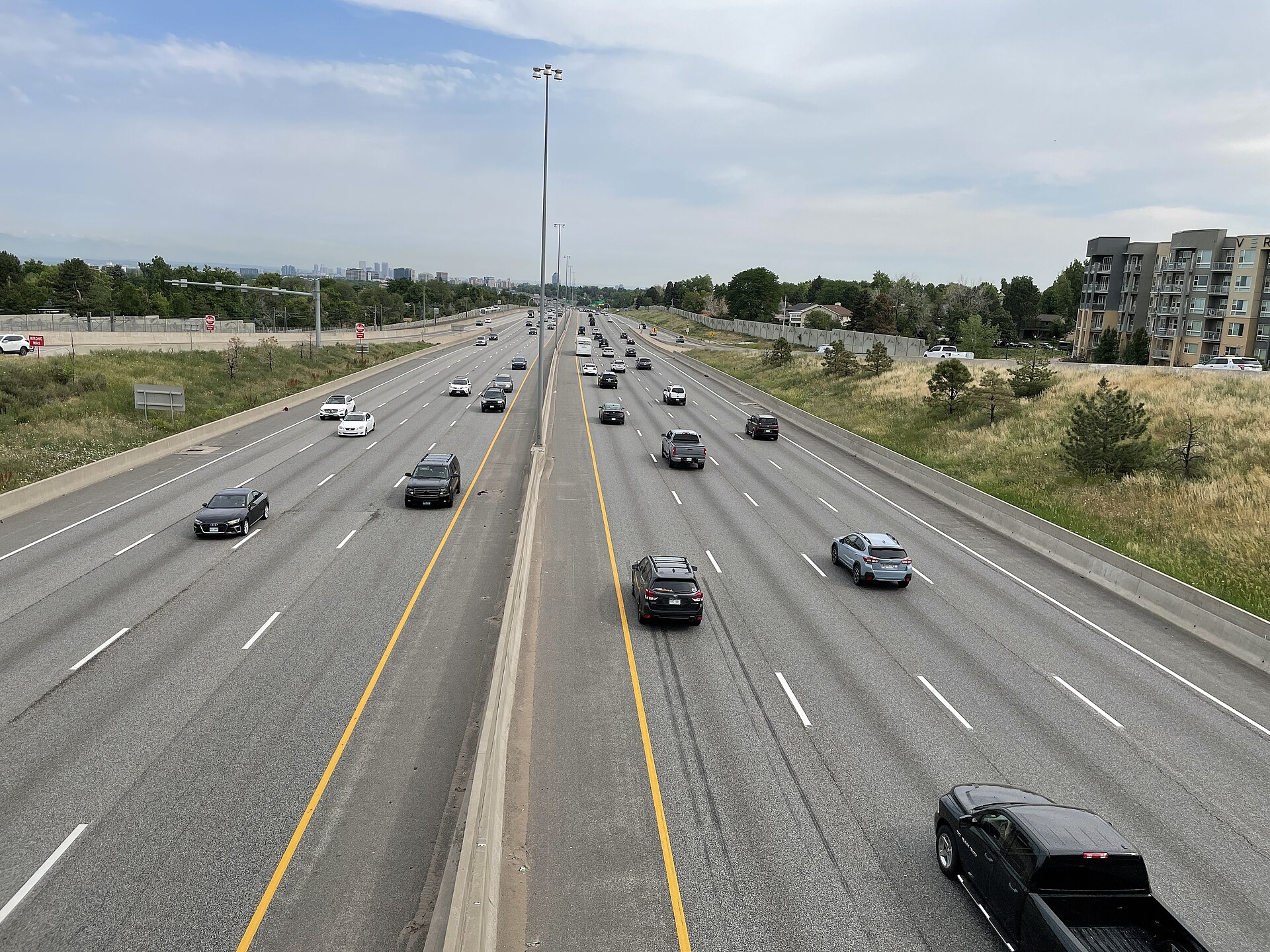
Interstate 25 through Denver is designed as a high-speed, limited-access highway — not a pedestrian environment. That basic fact has long troubled urban planners and safety advocates who note that the corridor bisects dense residential and commercial neighborhoods, creating situations where people on foot may find themselves near or on the highway, whether due to stranded vehicles, nearby access points, or gaps in adjacent infrastructure.
Denver has for years grappled with how to balance a highway system built decades ago for automobile throughput with a modern population that increasingly travels on foot, by bike, or by transit. The city’s Vision Zero initiative, adopted to eliminate traffic deaths, has centered largely on arterial streets and neighborhood corridors rather than interstate segments, which fall more directly under the Colorado Department of Transportation’s jurisdiction. That split in oversight — city streets versus state highways — often complicates efforts to address pedestrian risk holistically, since a fix on one system doesn’t necessarily extend to the other.
Neither CDOT nor the Denver Police Department had released a detailed causal analysis of Saturday’s crash at publication time. Investigations into fatal highway crashes typically take weeks to complete and can involve reconstruction specialists examining speed, visibility, roadway conditions, and driver behavior before any official conclusions are drawn. Front Range Report is not speculating on what led to Saturday’s crash beyond what police and news outlets have confirmed: one person died, and multiple others were injured.
Part of a Difficult Stretch for Denver Public Safety
The I-25 fatality did not occur in isolation. It capped a violent and difficult week for Denver, according to local news coverage. Just hours after the highway crash, Denver7 reported that police made an arrest connected to a fatal shooting on North Columbine Street. Earlier in the week, KDVR reported an arrest in a separate shooting that left one person dead and another injured, and 9News detailed how boys charged in a Denver murder case had multiple other pending criminal cases and were being investigated as possible suspects in yet another killing. Just days before that, CBS News reported that a man died and eight others were hurt in a shooting at a bar on East Hampden Avenue in south Denver.
Taken together, these incidents paint a picture of a city dealing with parallel public safety challenges — gun violence in some neighborhoods and traffic danger on its highways and streets. City officials, including the Denver Police Department, have not connected these incidents in any official statement, and each represents a distinct set of circumstances under separate investigation. But for many residents, the cumulative effect of a week filled with fatal shootings and a deadly highway crash raises broader anxiety about public safety across multiple categories, not just one.
Pedestrian Deaths: A Persistent Concern
Pedestrian safety has been an ongoing point of concern for Denver officials and advocacy groups in recent years, driven largely by traffic fatality data showing that people on foot represent a disproportionate share of the city’s roadway deaths relative to the miles they travel. Cities across the country, including Denver, have adopted Vision Zero frameworks — commitments to eliminate all traffic fatalities and severe injuries through engineering changes, enforcement, and education. Denver’s version of the program has included investments in crosswalk improvements, lower speed limits on certain arterials, and redesigns of dangerous intersections.
However, critics of these efforts argue that progress has been uneven, particularly on corridors like I-25 where high-speed design is baked into the infrastructure itself. Community members near the highway have periodically raised concerns about pedestrian access points, lighting, and barriers along sections of the interstate that run through dense parts of the city. Whether those concerns bear any relation to Saturday’s fatal crash is unknown and should not be assumed; that determination rests with investigators.
The Heat Factor
The record triple-digit heat reported by Denver7 over the same weekend adds another layer of context, if not necessarily causation, to a dangerous stretch of days in Denver. Extreme heat can affect road surfaces, vehicle performance, and driver alertness, and public health officials routinely warn during heat waves about increased risks to anyone spending time outdoors — including pedestrians navigating roadways or medians. Denver has broken multiple heat records already this year, according to earlier Denver Post coverage tracking the city’s push toward the 100-degree mark, part of a broader pattern of intensifying summer heat across the Front Range.
Whether heat played any role in Saturday’s crash has not been established and would fall within the scope of the ongoing investigation, if relevant at all.
What Comes Next
Denver police have not released additional details about the I-25 crash beyond confirming the fatality and multiple injuries. Families of victims, drivers involved, and the traveling public will likely wait weeks for a fuller account of what happened, consistent with the timelines typical of serious-injury and fatal crash investigations.
For a city already contending with a difficult week of violence and record heat, Saturday’s crash serves as a stark reminder of the multiple, overlapping ways Denver residents face risk simply moving through their city — whether behind the wheel, on foot, or waiting for answers about what happened on one of the region’s busiest highways. Front Range Report will continue to follow this story and provide updates as CDOT, Denver police, and other officials release further information.